By Sarah Lindenfeld Hall
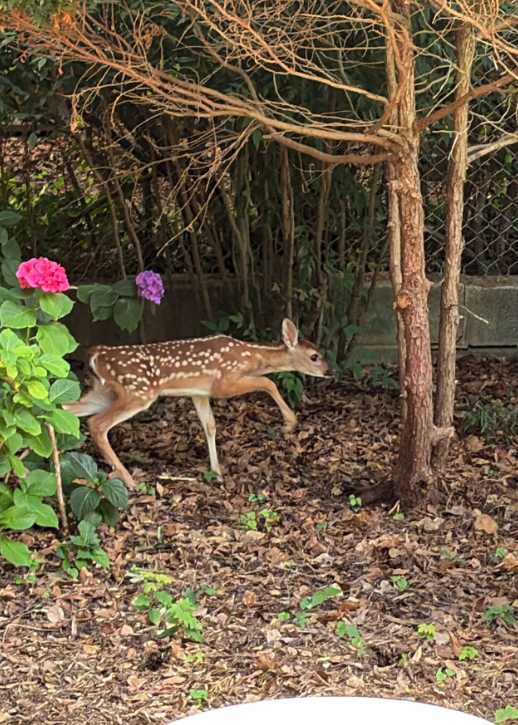
This week, I was working at my desk as usual when I spotted some movement outside. I turned my head justin time to spot what was moving — a tiny baby deer. Immediately, in what can only be described as giddy squealing, I summoned my daughter downstairs to witness this little guy or gal prance through our backyard and move on down the street. We’re hopeful it caught up with its mom, who neighbors had seen nearby.
In my urban-ish neighborhood, it’s not unusual to see deer, certainly not along the many miles of greenway. But on my driveway? That kind of surprise is something to giddily squeal about.
In my line of work, as a journalist and writer, I’m always looking for the baby deer — or rather the surprising detail that makes a story, report, case study or white paper. A buried historical fact in archival research. A great quote that perfectly sums up the whole story. A data point that makes an entire case study. A well-crafted survey question that turns up an unexpected result. It’s one of the best things about this work.
As a senior writer, I’ve been at the job for a bit, hunting down facts and spending time with sources to get to the meat of the story. I know which backyards to check, which questions to ask and why it’s important to stay patient until something worth squealing about wanders into view.
Of course, not every surprise is welcome, especially when you’re an editor, brand or business hiring a writer. The last thing you want is missed deadlines, thin sourcing or copy that misses the mark. If you’re looking for a writer who knows how to find those baby deer moments, check out the link in the comments.
This article first appeared as a LinkedIn post from Your Writers Bench.